
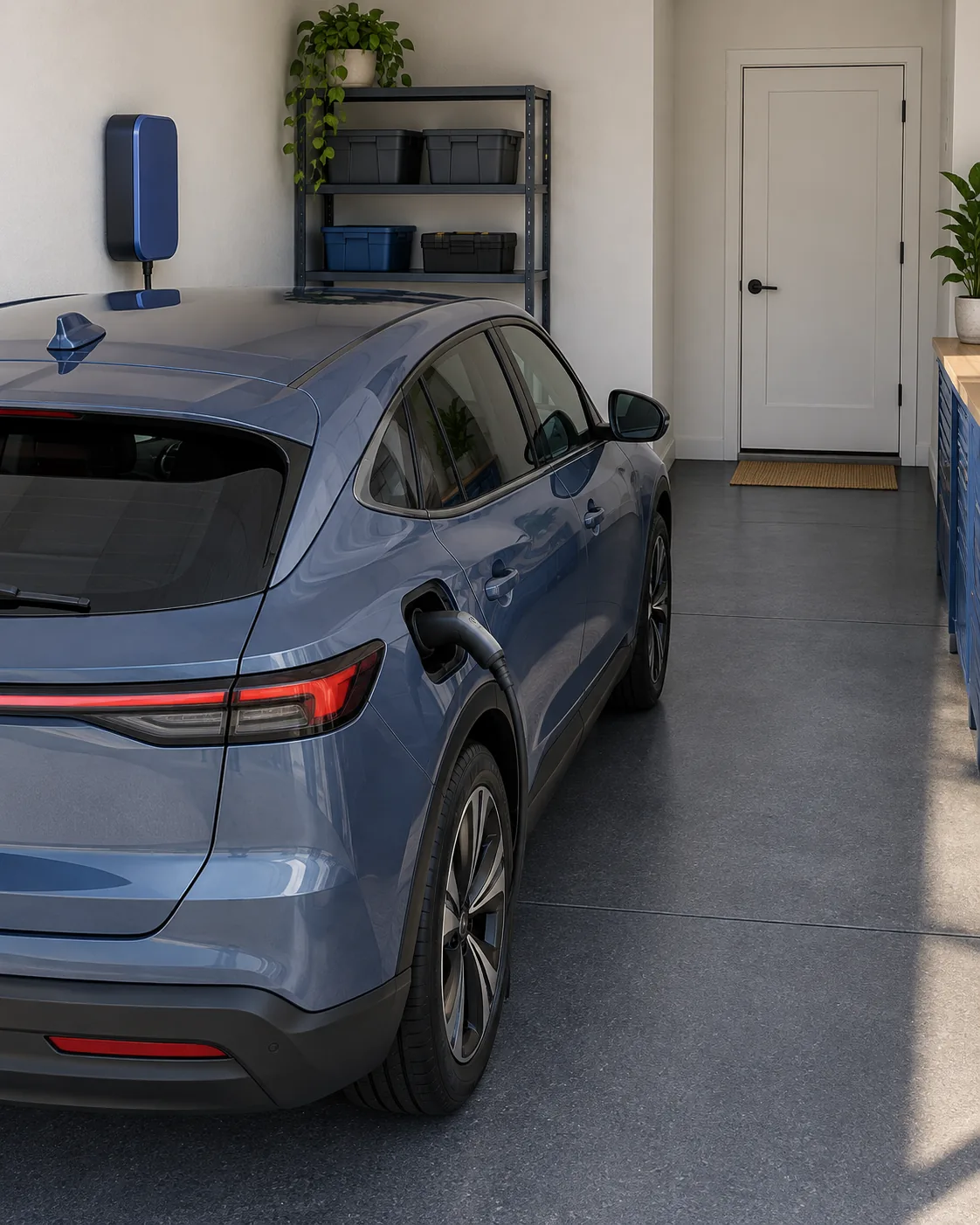
A charger can look right on a product page and still be awkward in your garage. The cable might approach the car from the wrong side, the quoted installation might exclude the charger itself, or the equipment choice might be made before anyone reviews the home's electrical system.
Before buying a home EV charger in Lakeland, give your installer a clear picture of the vehicle, your parking arrangement, and when you need it charged. Then agree on the equipment and installation scope. The brief below will help you prepare for that conversation without trying to design the electrical work yourself.
Describe the driving day you need to cover
Start with your normal weekday mileage and the hours the vehicle will be parked at home. Include an unusually busy day if it happens regularly. A weekly drive across Polk County matters more to this decision than a road trip you take once a year.
The EPA identifies driving habits, the home, and budget as factors in choosing home charging equipment. Its home EV charging guide is a useful starting point for that discussion.
Consider a hypothetical pair of neighbors who each drive 40 miles on a workday. One parks at 7 p.m. and leaves at 7 a.m. The other comes home at midnight and leaves at 5 a.m. They have 12 hours and five hours available, respectively. Their daily mileage matches, but the installer needs to evaluate different charging windows. Those times are planning examples, not charger-sizing recommendations.
Write down the ordinary requirement first: “I need to replace my weekday driving before I leave at 7.” Then add the exceptions. That gives the installer something more useful to assess than “I want the fastest charger.”
Send the exact vehicle and charger models
Include the vehicle's make, model, year, and trim, plus a link to any charger you are considering. If the car has not arrived, say so. Ask the installer to check the vehicle's home AC charging specifications and the proposed equipment together.
The EPA's guide identifies J1772 and J3400/NACS as home charging connector types. Confirm the connection for your particular vehicle with its manufacturer before ordering; do not make the choice from the brand name alone.
Your message should also say whether you already own the equipment. “Install an EV charger” can mean supplying and installing one, or installing a unit the homeowner provides. Ask which arrangement the written proposal assumes and who handles a defective or incompatible unit.
If a second EV is a definite purchase, include its details now. If it is only a possibility, ask for a separate future-use option so you can see what you would be paying for today.
Plan both routes: electricity to the charger, cable to the car
These are two different paths. The installer evaluates the electrical route to the mounting location. You can help evaluate the everyday path between that location and the car.
Park as you normally do, including the other household vehicle. Note the charge-port position and the doors, steps, storage, and walkways nearby. Take a wide photo showing the parking space rather than only a close-up of the proposed mounting wall. If you sometimes park outside, include that arrangement too.
The EPA advises choosing adequate cable reach and equipment rated for outdoor exposure when applicable. Have the installer review the location before purchase.
Use a simple test for each proposed position: explain how you would park, connect, disconnect, and put the cable away on an ordinary evening. A location that requires moving the second car every night deserves another look. Ask how the cable will be stored and kept clear of the route into the house.
Do not select a location based only on the shortest visible distance from the electrical panel. Ask for the practical tradeoff between the installation route and the way you actually use the parking space.
Leave electrical capacity and connection details to the installer
Ask the electrician to assess the home's electrical capacity and determine the appropriate circuit and connection method for the selected equipment. The EPA includes a load calculation among the professional checks for a new installation.
If the proposal includes panel or service work, ask what condition or capacity requirement makes that work necessary. Our guide to panel replacement versus a service upgrade explains the distinctions to discuss.
For preparation, photograph only safely accessible, closed equipment from a normal standing position if requested. Do not remove covers or inspect wiring. Give the installer the property address and utility name from your bill, and ask who will confirm the applicable permits and inspections.
Agree on what “finished” includes
Ask how the installer will demonstrate charging and hand over any settings, accounts, and documentation you need. Tell them if the car will be unavailable on installation day so they can explain the testing plan.
Connected equipment can involve setup beyond mounting the unit. For example, Tesla's Wall Connector instructions describe commissioning, connecting to Wi-Fi, and registration. Registration gives the customer access through the Tesla app. That is a product-specific example; ask what completion involves for your chosen charger.
Also clarify responsibility for wall repairs, painting, or other finish work if the proposed route requires it. Get those boundaries into the written scope before scheduling.
Your installer brief
Copy these fields into a message and fill in what you know. Mark unanswered items “to confirm.”
- Vehicle: Make, model, year, trim, and expected delivery date.
- Routine: Typical weekday miles, recurring longer days, arrival time, and departure time.
- Parking: Usual space, parking direction, charge-port location, and whether outdoor charging is needed.
- Equipment: Exact product link, whether already purchased, and who should supply it.
- Property: Address, electric utility, and a wide parking-area photo.
- Future plans: A confirmed second vehicle or other planned electrical project, with timing.
- Completion questions: What will be tested, what setup is included, and who handles permits and finish repairs?
Barnes Electric provides home EV charger installation in Lakeland and the surrounding service area. Bring this brief to the project conversation so the proposed installation can reflect your vehicle and parking routine. Contact Barnes Electric or call 863-213-5099 to discuss the work before ordering equipment.